How to Train a Dog That’s Easily Distracted by Other Dogs
Training a distracted dog around other dogs can feel frustrating, especially when your pup’s attention disappears the moment another dog enters the scene. Whether it’s excitement, anxiety, or lack of impulse control, distraction is a common challenge in dog training. Fortunately, with the right strategies—like distance management, focus-building games, and controlled exposure—you can teach your dog to stay engaged with you, even in the presence of other dogs. Let’s walk through the steps to help your dog tune in and respond calmly.
Historically, the foundation of dog training revolves around consistency and positive reinforcement. Remarkably, a 2019 survey found that 70% of dog trainers recommend starting training in low-distraction environments. Gradual exposure to other dogs will condition the easily distracted dog, making the training process more efficient and effective.
- Assess your dog’s level of distraction by observing their behavior around other dogs.
- Create a controlled training environment with minimal distractions initially.
- Introduce focused attention exercises to build concentration skills.
- Gradually increase the level of distractions to help your dog adapt.
- Reinforce and reward desired behaviors consistently to encourage focus and obedience.
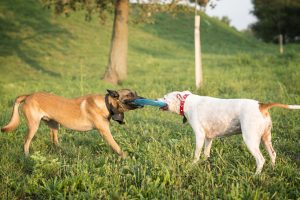
How to Train a Dog That’s Easily Distracted by Other Dogs
Training a dog that easily gets distracted by other dogs requires patience and consistency. The first step is understanding why your dog gets distracted. Often, it’s due to excitement or anxiety. Once you identify the reason, you can tailor the training to your dog’s needs. For example, if your dog is excited, you might increase physical activity to release some of its energy.
Creating a controlled training environment is crucial for success. Start in a quiet area with minimal distractions. Practice basic commands like “sit”, “stay”, and “focus.” Gradually introduce more distractions as your dog becomes comfortable. Reward your dog with treats and praise for good behavior.
Utilize focused attention exercises to enhance your dog’s concentration. These exercises help dogs learn to ignore distractions and focus on their owners. Try using a favorite toy or treat to grab your dog’s attention. Hold it up to your face and wait for your dog to make eye contact. Reward your dog when he or she looks at you, reinforcing the desired behavior.
Tools and accessories can also aid in training. Consider using a head halter or a no-pull harness to gain better control. These tools can make it easier to manage your dog during training sessions. Additionally, clickers or whistles can be useful for marking good behavior. Always remember, consistency and patience are key to success.
Step #1: Assessing Your Dog’s Current Level of Distraction
Assessing your dog’s current level of distraction is the foundation of effective training. Observe your dog during walks and note how they react to other dogs. Does your dog bark, pull, or become anxious? Pay attention to these reactions to understand their triggers. This observation period is crucial for creating a tailored training plan.
Start by documenting your dog’s behavior in a journal or use a simple table:
| Situation | Dog’s Reaction | Intensity (1-10) |
|---|---|---|
| Seeing another dog | Barking and pulling | 8 |
| Hearing a distant bark | Alert but calm | 3 |
This record will help you identify patterns in your dog’s distractions. It’s essential to distinguish between different types of distractions. Some dogs might only get distracted when the other dog is very close. Others might react to any sound or movement from a distance. Understanding these patterns is the first step to addressing the issue effectively.
Once you know your dog’s distraction points, you can tailor your training sessions accordingly. For example, if your dog is more distracted by close encounters, start by using more controlled, distant situations. Gradually decrease the distance as your dog becomes more comfortable. This measured approach can significantly improve training outcomes.
Step #2: Creating a Controlled Training Environment
Creating a controlled training environment is essential to help your dog focus. Start by selecting a quiet location with minimal distractions. Your backyard or an empty park during off-peak hours can be ideal. This setting allows your dog to concentrate solely on you and the training exercises. It’s important to gradually introduce distractions later.
Set up a designated training area with everything you need:
- Treats and rewards
- Leash and harness
- Toys
- Clicker or whistle
Having all these items ready will streamline your training sessions. Begin with basic commands like “sit,” “stay,” and “focus.” Ensure that your dog masters these commands in a controlled setting before moving on to more challenging environments with more distractions.
Gradually introduce mild distractions once your dog is comfortable. For example, you can ask a friend to walk past at a distance. Observe your dog’s reaction and reward them for maintaining focus on you. Slowly increase the complexity and frequency of distractions to build your dog’s concentration skills over time.
Step #3: Introducing Focused Attention Exercises
Focused attention exercises are fundamental for training a distracted dog. These exercises help your dog learn to keep their focus on you, regardless of what is happening around them. Begin with simple tasks that require your dog to maintain eye contact. Use a treat or toy to catch their attention. Once they are looking at you, reward them immediately.
Consistency is key when practicing focused attention exercises. Start with short sessions, around five minutes long. Gradually increase the duration as your dog becomes better at maintaining focus. This will help build their ability to pay attention over longer periods. Remember to always finish on a positive note, rewarding your dog for their effort.
Adding variety to your exercises can make training more engaging for your dog. Some effective focused attention exercises include:
- Target training: Teach your dog to touch a specific object with their nose.
- Watch me: Have your dog hold eye contact for increasing durations.
- Leave it: Train your dog to ignore distractions and focus on you instead.
Practice these exercises in different environments to generalize the behavior. This means your dog should learn to stay focused both inside your home and outdoors. Gradually increase the level of distractions in the environment. Start with fewer distractions and slowly introduce more as your dog improves.
Using tools, such as clickers, can enhance focus by providing a clear signal. Clickers mark the moment your dog performs the desired behavior, making it easier for them to understand what’s expected. Pair the click with a treat to reinforce the behavior. Over time, your dog will associate the click with the reward and the focus.
Patience and consistency in practicing these exercises are crucial. Each dog learns at their own pace, so it’s important to adapt the training process to fit your dog’s needs. Keep sessions positive and fun to maintain your dog’s interest and enthusiasm. Celebrate progress, no matter how small, to keep both you and your dog motivated.
Step #4: Gradually Increasing the Level of Distractions
Once your dog has mastered distraction-free environments, it’s time to introduce more complexity. Gradually increasing the level of distractions will help your dog remain focused in real-world situations. Begin by adding mild distractions, such as moving objects or distant sounds. Observe how your dog reacts and reward them for maintaining attention on you. This positive reinforcement will help solidify their training.
As your dog becomes comfortable with mild distractions, you can slowly escalate the challenges. Introduce more stimulating distractions, like people walking by or other dogs at a distance. Practice commands and focus exercises during these scenarios. Make sure to keep sessions short initially to avoid overwhelming your dog. Gradually increase the duration as they become better at handling distractions.
Consistency is crucial when exposing your dog to higher levels of distraction. Maintain a regular training schedule and slowly increase the difficulty. For instance, you can try the following steps:
- Start with another dog walking at a distance.
- Gradually decrease the distance between your dog and the distraction.
- Introduce multiple dogs and people in the environment.
- Practice in areas with high activity, like dog parks.
Increasing the level of distraction in a controlled manner helps your dog build confidence. It also teaches them to focus on you regardless of external stimuli. This process takes time, so patience is essential. Celebrate small victories to keep yourself and your dog motivated.
Be mindful of your dog’s limits during these training sessions. Every dog is different and might need additional time to adjust. If your dog shows signs of stress or anxiety, take a step back and lower the level of distraction temporarily. Gradual progress is key to long-term success.
By gradually introducing more complex distractions in a controlled way, your dog will learn to stay focused in any situation. This method ensures that your dog remains calm and attentive, even when faced with various external stimuli. Eventually, your training efforts will pay off, resulting in a well-behaved dog.
Step #5: Reinforcing and Rewarding Desired Behaviors
Reinforcing and rewarding desired behaviors is a crucial aspect of dog training. Positive reinforcement helps your dog understand which behaviors are acceptable and encourages them to repeat these actions. Use treats and praise immediately after your dog completes the desired behavior. This association will strengthen their understanding. Over time, your dog will naturally exhibit more of these positive behaviors.
Consistency is key when it comes to reinforcement. Always reward your dog every time they perform the desired behavior. This helps to establish a clear connection between the action and the reward. As your dog becomes more consistent, you can gradually reduce the frequency of treats and replace them with verbal praise or petting. This way, your dog remains motivated to continue the behavior.
It can be helpful to vary the rewards to keep your dog engaged. Some dogs might prefer certain treats or toys over others. Consider using a mix of:
- High-value treats
- Favorite toys
- Verbal praise such as “Good job!”
- Extra playtime
This variety keeps the reinforcement exciting for your dog and maintains their interest in training. Pay attention to what your dog responds to the most and adjust your rewards accordingly. The goal is to keep your dog motivated and eager to learn.
Remember to reinforce desired behaviors promptly. Timing is critical in dog training. Reward your dog as soon as they complete the behavior to help them understand what action you are reinforcing. Delayed rewards can confuse your dog and hinder their learning process. Immediate reinforcement helps to create a strong association between the behavior and the reward.
Patience and consistency are essential throughout the training process. Every dog learns at their own pace, so don’t get discouraged if progress seems slow. Celebrate small victories and continue to reinforce and reward even the smallest achievements. With time and dedication, your dog will develop the desired behaviors and become well-trained.
Key Techniques to Maintain Focus During Walks
Maintaining your dog’s focus during walks can be challenging but achievable with the right techniques. Using a consistent routine helps set clear expectations. Start each walk with a few minutes of basic training exercises, such as “sit” and “stay.” This helps your dog get into a focused mindset. Consistency is essential for reinforcing these behaviors over time.
Incorporate structured breaks during your walks to keep your dog’s attention on you:
- Frequent check-ins: Make your dog stop and sit every few minutes.
- Name recognition: Call your dog’s name and reward them when they respond.
- Interactive play: Use toys or treats to engage your dog mid-walk.
These breaks help reset their focus and ensure they remain attentive throughout the walk. Short, frequent stops are less overwhelming than prolonged sessions, making it easier for dogs to stay engaged. Gradually reduce the frequency of these breaks as your dog’s attention span improves.
Avoiding hotspots of distraction can also make a big difference. If certain areas trigger excess excitement or anxiety, plan alternative routes initially. Slowly expose your dog to more stimulating environments once they build better focus. Controlled exposure aids in managing distractions effectively without overwhelming them.
Praise and rewards are important tools for maintaining focus during walks. Always have treats on hand to reward good behavior immediately. Positive reinforcement encourages repetition of desired actions, helping solidify training efforts. Adjust praise levels based on distractions; higher distractions should come with higher rewards.
Tools and Accessories to Aid in Training
Various tools and accessories can help when training a dog that is easily distracted by other dogs. Using the right equipment can make a noticeable difference in handling and guiding your dog. A popular tool is the no-pull harness, which provides better control without causing discomfort. These harnesses help prevent pulling by redirecting your dog’s attention back to you. Another useful tool is the head halter, which offers more control over the dog’s head movements.
Clickers are another effective accessory for dog training. They make a distinct sound that signals to your dog that they have performed the desired behavior. Pairing the clicker with treats reinforces positive behavior. This helps your dog quickly grasp what actions lead to rewards. Consistency in using the clicker is key to its effectiveness.
Interactive toys and puzzle feeders can also support your training efforts:
- Kong toys: Fill them with treats to keep your dog engaged.
- Snuffle mats: Encourage natural foraging and focus.
- Chew toys: Satisfy your dog’s need to chew and reduce stress.
These toys can keep your dog occupied and less prone to distractions when you’re not actively training. They also help improve mental stimulation, reducing boredom and anxiety.
Treat pouches are handy for quick reward access during walks and training sessions. Wearing a treat pouch ensures that your rewards are easily accessible. This allows you to immediately reinforce good behavior. Choose pouches that are comfortable and easy to clean. Keeping them stocked with high-value treats can enhance your training efforts.
Static or vibrating collars can also be considered in some cases. However, these should be used with caution and preferably under the guidance of a professional trainer. They can be effective in curbing severe distractions if used correctly. The goal is to always prioritize your dog’s comfort and well-being while achieving training success.
Common Challenges and How to Overcome Them
Training a dog that’s easily distracted by other dogs comes with its challenges. One common issue is maintaining your dog’s focus in busy environments. Dogs are naturally curious and might find it hard to concentrate. To overcome this, start in quieter areas and slowly introduce more stimuli. Gradual exposure helps your dog adapt without feeling overwhelmed.
Another challenge is dealing with your dog’s anxiety or excitement. Dogs may become overly excited or anxious around other dogs. This can lead to behaviors like barking or pulling. Using calming techniques and positive reinforcement can help. Tools like no-pull harnesses can make it easier to manage these behaviors.
Consistency in training can also be difficult to maintain. Life gets busy, and it’s easy to skip training sessions. However, regular practice is essential for progress. Creating a schedule can help maintain consistency. Even short daily sessions can make a big difference.
Managing distractions while training can be particularly tough. Here are some techniques to tackle distraction challenges:
- Use high-value treats to grab your dog’s attention.
- Incorporate focused attention exercises.
- Practice commands in different environments.
Applying these techniques will help your dog understand that they need to focus on you, not the distractions. Regularly practicing these strategies can lead to better results over time.
Patience is another common hurdle. Training a distracted dog takes time and effort. Progress can be slow, and setbacks are normal. Remember to stay patient and consistent. Celebrate small victories to keep both you and your dog motivated.
Signs of Improvement and Success in Training
Recognizing signs of improvement and success in dog training is essential to stay motivated. One clear sign is your dog’s ability to maintain focus for longer periods. Initially, they might get distracted quickly. But with consistent training, you’ll notice they can stay engaged for extended durations. This indicates they are learning to manage their impulses better.
Another positive indicator is your dog’s responsiveness to commands. Quick and enthusiastic responses to cues like “sit,” “stay,” and “focus” show progress. This means your dog is not just hearing the commands but also understanding and following them. Consistent correct behavior when given commands is a strong sign of successful training.
Your dog’s reduced reactions to distractions is also a significant sign. Initially, your dog might bark, pull, or become anxious around other dogs. Over time, these reactions should diminish. If your dog starts to ignore other dogs and remains focused on you, it’s a clear win. This shows that the training is effectively changing their behavior.
Improvements can also be seen in calmer and more controlled walks. If your dog is less likely to pull on the leash or lunge at distractions, it’s a positive sign of training success. These calmer walks make the daily routine more enjoyable for both of you. Consistent improvement in behavior during walks is a clear indicator that your efforts are paying off.
Overall, gradual changes in your dog’s behavior highlight the effectiveness of your training. Celebrate these small victories with extra rewards and positive reinforcement. Keeping track of these successes can motivate you to continue training and help you tailor your approach for even better results. Patience and consistency will lead to significant strides in your dog’s behavior.
Frequently Asked Questions
Training a dog that is easily distracted by other dogs can be challenging. Here are some commonly asked questions to help you navigate this process.
1. Why does my dog get distracted by other dogs?
Dogs can get distracted by other dogs for various reasons, including excitement and curiosity. Some dogs are naturally more social and interested in other dogs, making it harder for them to focus on their owner during walks.
Additionally, a lack of proper socialization or previous negative experiences with other dogs can cause distractions. Understanding the root cause can help you tailor your training approach more effectively.
2. How can I teach my dog to ignore other dogs?
Teaching your dog to ignore other dogs requires patience and consistent training. Start by practicing basic commands like “sit” and “stay” in a distraction-free environment, gradually introducing the presence of other dogs at a distance.
Reward your dog for focusing on you and following commands, gradually decreasing the distance to other dogs as your dog becomes more confident. Using high-value treats can also help maintain your dog’s attention.
3. What should I do if my dog barks at other dogs during walks?
If your dog barks at other dogs during walks, try redirecting their attention with a treat or a favorite toy. Use commands like “look at me” to encourage them to focus on you instead of the other dog.
Practice these techniques consistently and gradually expose your dog to other dogs in a controlled manner. Over time, your dog should become less reactive and more focused on you during walks.
4. Are there specific tools that can help with training a distracted dog?
Yes, several tools can aid in training a distracted dog. No-pull harnesses, head halters, and clickers can provide better control and help reinforce positive behaviors.
Interactive toys and treat-dispensing devices can also be useful for keeping your dog engaged and focused during training sessions. Choose tools that are comfortable and suitable for your dog’s size and temperament.
5. How long does it take to train a dog to focus during walks?
The time it takes to train a dog to focus during walks varies depending on the individual dog. Some dogs may learn quickly, while others might take several weeks or months of consistent training.
Be patient and consistent with your training efforts, and celebrate small milestones along the way. Remember, every dog learns at their own pace, and perseverance will lead to success.
REACTIVE DOG TUTORIAL: Stop Barking and Lunging at Other Dogs
Conclusion
Training a dog that is easily distracted by other dogs requires patience and consistency. By following structured steps and gradually increasing distractions, your dog can learn to focus better. The right tools and positive reinforcement play a crucial role in this process.
Remember, each dog is unique and will progress at their own pace. Celebrate small victories and stay dedicated to your training efforts. With time and perseverance, you and your dog will enjoy more focused and enjoyable walks together.
"*" indicates required fields